 Understand your relationship
 Diagnostics and treatment
 Before starting
 Journal
 Resources
 nfs Zorg & Welzijn
 Practice
Trigger
A situation touches a vulnerable place.

Couples therapy
Treatment focuses on recognising and understanding the underlying patterns that sustain difficulties, making change possible in thought, feeling and behaviour.
Recurring interactions
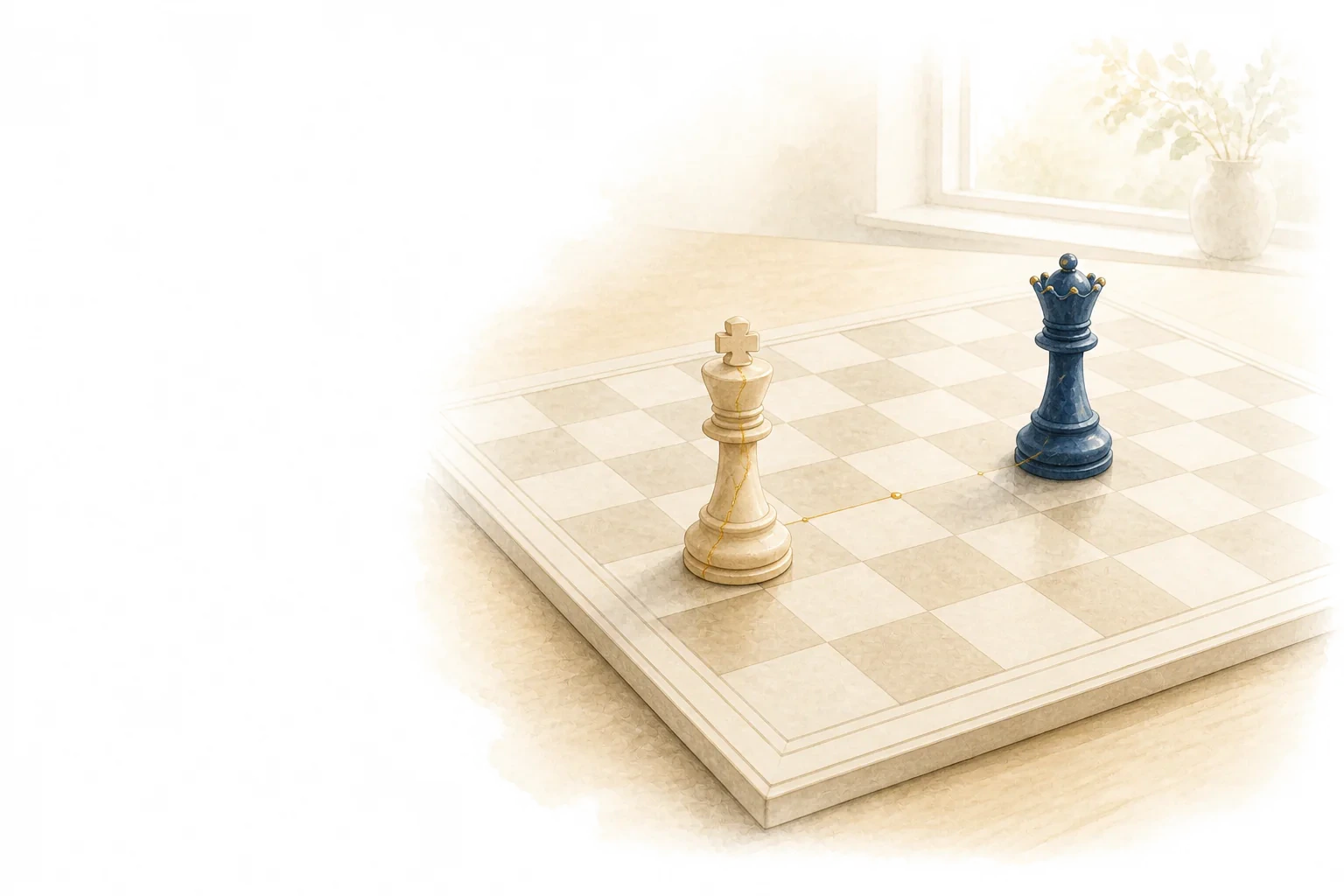
A protective response can create tension, setting in motion an interaction in which reaching out and withdrawing increasingly reinforce one another. What begins as an attempt to restore contact or preserve calm can develop into a recurring dynamic in which both partners feel less heard or understood.
Treatment explores how this interaction develops, the emotions and needs beneath it, and the responses that keep the pattern going. Recognising and regulating signs of tension earlier creates more room to respond deliberately and shape contact differently.
A situation touches a vulnerable place.
Protective responses take over.
Attunement diminishes and distance grows.
The same dynamic is activated again.
Treatment
Sessions 1–3
We slow escalation and practise recognising and regulating tension. Both perspectives receive attention so that contact can become possible again.
Sessions 4–7 · midpoint review
We explore the emotions, expectations and needs beneath responses. This reveals how responses evoke one another and influence the dynamics between partners.
Sessions 8–12
We practise expressing needs, responding with attunement and repairing after difficult moments. The focus is on what can change within the interaction.
Session 13 · completion review
We strengthen what works and consider how new responses can remain available under pressure. Progress is translated into a practical plan for what comes next.
What we work towards
Recognising tension earlier and being able to slow it down.
Discussing a difficult moment and restoring contact.
Expressing what is needed, with consideration for both partners.
Room for warmth, closeness and cooperation.
Appropriate care
Good to know
Treatment focuses on the relationship and usually takes place together. If an individual conversation would be clinically useful, its purpose and boundaries are discussed with both partners beforehand.
During the diagnostic process and the start of treatment, we discuss what each person needs to participate freely and safely. There is room to explore uncertainty.
Yes. Sessions can take place online or in Amsterdam by appointment, when clinically appropriate. Once we agree to proceed, we arrange a consultation room and confirm the address before your appointment. There is currently no waiting list.
At completion, we review progress, remaining concerns and possible next steps. The ongoing plan supports continued use of the understanding and skills developed.